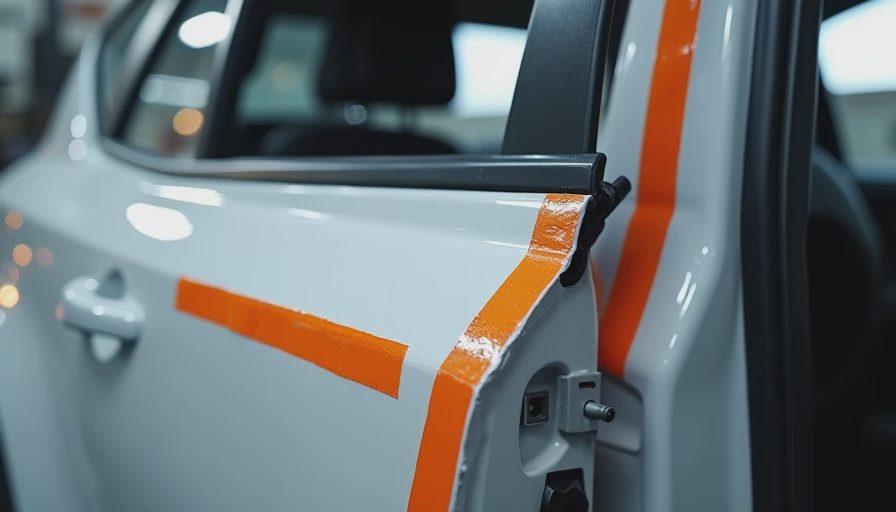
I have been doing collision repair for fourteen years. I-CAR certified. Worked at two different shops, one high-volume DRP and one small independent that only does structural and heavy hits.
I have sectioned more B-pillars than I can count.
And I have also told customers "no" when the insurance company said yes.
This thread is not for weekend warriors. This is for body pros who have to sleep at night after a structural repair leaves the shop.
The short version of my question
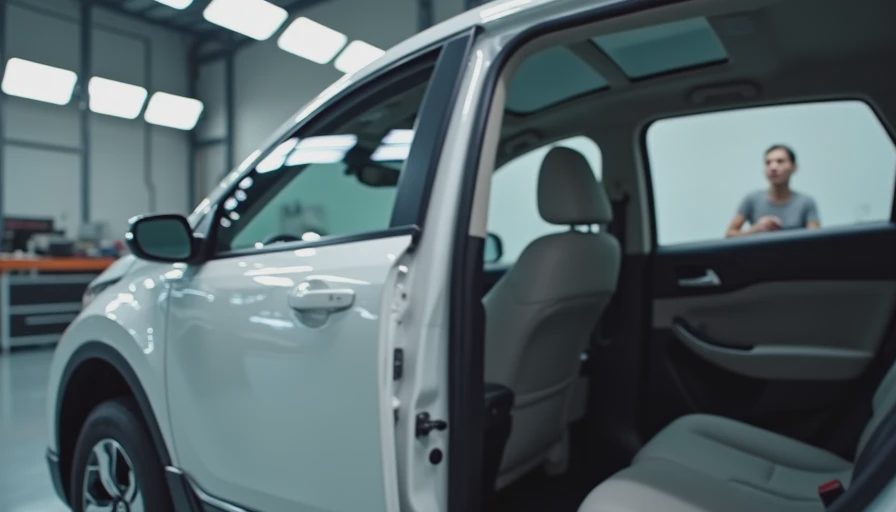
We all know manufacturers publish sectioning guidelines. Cut here. Weld here. Overlap this much.
But following the book is not the same as believing the repair.
So here is what I am asking:
Where is your personal red line on B-pillar sectioning? Not the manufacturer's line. Yours.
And do not say "if it fits the spec, it's fine." That is the adjuster answer. I want the pro answer.
Why I am asking this now
Last month I had a 2023 Honda CR-V. Side impact. B-pillar crushed right at the beltline. The OEM procedure said section at the roof rail and at the rocker. Clean cut. Replace the whole middle section.
I did the repair. It passed every measurement. The welds looked clean. Cavity wax applied. The car left.
And I still think about it.
Because the B-pillar is not just a tube. It is the only thing between that rear passenger and whatever is coming through the side window. On a unibody SUV, that pillar is doing work.
The customer was a mom with two kids in the back seat.
I followed the rules. But I am not sure I believe the rules are good enough.
Where I personally start getting uncomfortable
Here is my rough line today. It changes over time as I see more failures and near-failures.
Green light (I sleep fine):
Section above the seatbelt anchor point AND below the beltline
No intrusion into the inner reinforcement layer (outer skin only)
No buckle or bend in the rocker or roof rail where the pillar attaches
Customer gets photos of the raw weld before seam sealer
Yellow light (I warn the customer in writing):
Section requires cutting through the inner reinforcement layer
Rocker or roof rail has minor deformation that also gets pulled
B-pillar bend occurred at the exact same height as the seatbelt retractor
Red line (I refuse or push for total loss):
Section would be within 2 inches of the seatbelt anchor point
Multiple buckles in the pillar requiring two separate section joints in the same pillar
Rocker or roof rail crushed enough that they also need sectioning on the same side
Any visible crack in the weld zone of the inner reinforcement, not just the outer panel
I have walked away from three jobs in the last two years where the insurer wanted a B-pillar section and I said no. In two of those cases, the car went to another shop. I do not know how those repairs turned out.
What I have seen go wrong
I am not talking about theory. I have seen:
Case one: 2017 Civic, B-pillar section at the beltline. Customer came back at 18 months. Rear door gap had tightened by 4mm. The pillar had slowly moved. No weld failure. But the surrounding metal had fatigued and shifted.
Case two: 2019 RAV4, B-pillar section plus rocker section. At two years, the owner heard a pop when pulling into a steep driveway. No visible crack. But the chassis felt looser. We put it on the rack and the B-pillar was leaning 3mm at the beltline compared to the other side. No one could tell me if it was unsafe. But no one could tell me it was safe either.
Case three: 2015 F-150 SuperCrew, B-pillar section at the roof and rocker. Never came back. But I saw it at auction three years later. Door closed like garbage. Visible corrosion at the lower weld line because cavity wax application failed.
None of these cars crashed again. So I cannot tell you the weld would have failed in a second impact. But I can tell you the repairs did not hold time well.
What I want to hear from other pros
I am not here to tell anyone they are wrong. The industry has to fix these cars. Insurance pressure is real. Customers cannot afford new vehicles.
But I want an honest conversation.
Answer these three questions if you have been doing this work for five years or more:
1. What is your personal red line on B-pillar sectioning? Be specific. Give me a measurement or a condition.
2. Have you ever seen a sectioned B-pillar perform well in a real-world second crash? Not a lab test. A real one. If yes, what was different about that repair?
3. Do you give customers a written warning about long-term risks before a B-pillar section? If not, why not?
And if you have ever refused a B-pillar repair that the book allowed, tell me what the final straw was.
What I am not asking
I am not asking for the official line from OEM procedures. I can read those.
I am not asking for "a good welder can fix anything." That is not an answer.
I am asking for your gut, hardened by years of seeing these repairs age.
One more thing
If you are a shop owner and you push your techs to section every B-pillar the insurer approves without question, I want to hear from you too. Tell me why you are confident.
I am open to changing my mind. But you have to bring evidence, not production pressure.
No notes yet — write the first.