You’re staring at bare metal on a unibody rail that’s been sectioned, welded, and ground smooth. The repair is structurally sound, but now the clock is ticking. If that fresh metal isn’t sealed properly, corrosion will undermine everything you just did. That’s where **Kirker epoxy primer** comes in — a go-to for many collision shops that need a reliable, corrosion-blocking base before paint.
What does the paperwork actually show? When you look at repair invoices from shops that consistently turn out clean, durable work, you’ll see Kirker epoxy primer listed again and again. It’s not the flashiest name in the paint aisle, but it’s earned a reputation for adhesion that lasts — even on complex substrates like galvanized steel, aluminum, and OEM e-coat.
What Makes Kirker Epoxy Primer Different?
Epoxy primers are two-part systems that chemically cross-link to form a tough, moisture-resistant film. Kirker’s version is formulated for both direct-to-metal (DTM) application and as a sealer under urethane topcoats. The key difference from less expensive polyester or urethane primers is the corrosion barrier. On a rail that’s been cut and repaired, that barrier isn’t optional — it’s the line between a repair that holds up for years and one that fails from the inside out.
Kirker epoxy primer sands well after a short flash time (usually 30–60 minutes at 70°F) and can be topcoated within 24 hours. That workflow speed matters in a busy shop where a car can’t sit for days waiting for primer to cure. But don’t mistake convenience for compromise — properly mixed Kirker epoxy meets or exceeds OEM corrosion specs when tested in salt-spray chambers.
Application Tips for Consistent Results
I’ve seen too many good repairs ruined by sloppy priming. Here’s what the evidence shows works best with Kirker epoxy primer:
- **Mix ratio is critical.** Kirker uses a 4:1 mix (primer to activator) by volume. Don’t eyeball it — use graduated mixing cups. Off-ratio epoxy either won’t cure hard or becomes brittle.
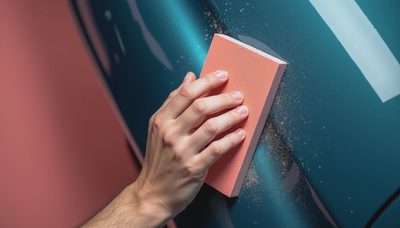
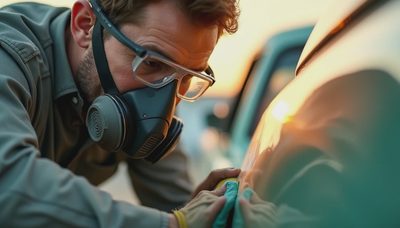
- **Surface prep is non-negotiable.** Bare metal must be cleaned, degreased, and scuffed (80–180 grit) with no oxidation visible. The same goes for existing paint or primer — mechanical adhesion is the goal.
- **Apply in thin, wet coats.** Two medium coats (2–3 mils each) beats one thick coat that can trap solvent or run. Flash between coats until tack-free.
- **Don’t rush the recoat window.** Kirker allows topcoating within 24 hours without sanding. After 24 hours, scuff with 400–600 grit before applying your color coat or sealer.
Cost vs. Performance: Is Kirker Worth It?
Let’s talk money because that’s real. A gallon of Kirker epoxy primer with activator runs roughly $80–$120 depending on the supplier. That’s competitive with major brands like PPG or Sherwin-Williams, which can push $200–$300 per gallon for comparable epoxy. For a shop doing multiple repair jobs per week, the savings add up fast — especially when you factor in fewer do-overs because of adhesion failure.
But cheap isn’t always better. I’ve heard from guys who tried off-brand epoxy from Amazon and ended up with fisheyes, poor sandability, or mysterious delamination a year later. Kirker is budget-friendly without being budget-quality. It’s been around for decades, and the formulation is consistent. That counts.
When Not to Use Kirker Epoxy Primer
Cosmetically clean is not structurally clean. Kirker epoxy primer is excellent for most collision repairs, but it’s not a cure-all. Avoid using it directly over bare aluminum without an etch primer or conversion coating first — the adhesion can be weak on very smooth aluminum surfaces. Also, don’t use it on flexible plastic parts (use a dedicated flex primer). And never apply it over wax, grease, or silicone-based products. The primer will literally crawl away from the contamination.
How It Fits into the Bigger Repair Picture
The question isn’t whether it looks fixed — it’s what was cut, pulled, replaced, and how it drives now. The primer is part of that equation. A rail that’s properly welded and then sealed with Kirker epoxy primer will resist moisture intrusion better than a rail covered with conventional urethane primer. In a side-impact or frontal crash, that corrosion resistance keeps the metal strong. Insurance companies may not pay out for “premium” primer, but if you’re doing the repair right, you use the right material anyway.
Common Questions About Kirker Epoxy Primer
**Can Kirker epoxy primer be applied over old paint?**
Yes, as long as the old paint is fully cured, clean, and scuffed. Use 400-grit sandpaper to promote mechanical adhesion. Avoid applying over uncured or oily surfaces.
**How long does it take to cure before sanding?**
At 70°F, Kirker epoxy primer can be sanded after 30–60 minutes. For best results, wait until it is dry to the touch but not fully hardened. Full cure takes 24 hours.
**Does it work on plastic bumpers?**
No. Epoxy primers are designed for metal and rigid substrates. Use a flexible primer for plastic parts.
**What reducer can I use?**
Kirker recommends their own epoxy reducer for best flow and leveling. Using off-brand reducers can cause solvent pop or adhesion issues.
**What is the correct mix ratio?**
The mix ratio is 4:1 (primer to activator) by volume. Always use a graduated mixing cup to ensure accuracy. Incorrect mixing can lead to poor cure or adhesion.
**What is the pot life after mixing?**
Once mixed, the pot life is approximately 4–6 hours at 70°F. Discard any unused mixture after that time to avoid applying thickened material.
**Can it be topcoated the same day?**
Yes, Kirker epoxy primer can be topcoated within 24 hours without sanding. After 24 hours, scuff before topcoating.
Final Take: Should You Switch to Kirker?
If you’re already using a high-end epoxy and getting good results, there’s no urgent need to change. But if you’re paying more than $150 per gallon or dealing with adhesion issues on mixed-metal repairs, Kirker epoxy primer is worth testing on your next job. Start with a quart kit to validate the workflow, then buy gallon if it works. Keep the mixing ratio locked in, prep like your reputation depends on it, and you’ll have a primer that pulls its weight — in the booth and on the road.
No notes yet — write the first.