When a car has been in a serious accident or is being restored from the ground up, accessing every inch of the underbody and frame is critical. A car rotisserie is the tool that makes that possible. It bolts to the vehicle at the bumper or frame rail mounting points and allows the entire shell to be rotated 360 degrees. For anyone dealing with structural repair—whether after a collision or during a rust restoration—a car rotisserie is not just a convenience. It is a necessity for doing the job right.
Without a rotisserie, you are stuck working on your back under a car on jack stands, trying to weld overhead, grind upside down, or apply rust treatment in awkward positions. The quality of the work suffers, and so does the safety of the repair. A rotisserie solves that by bringing the work to you. You can position the car exactly where you need it, with the damaged area at eye level or at a comfortable working angle.
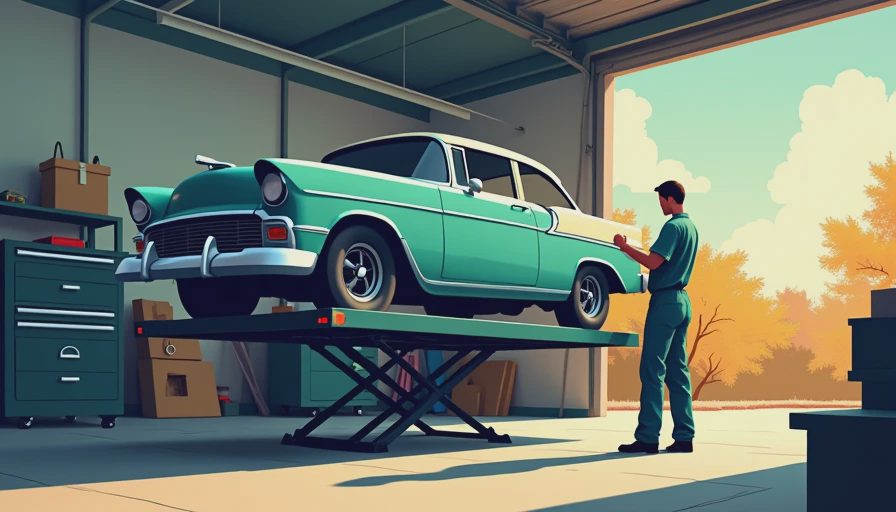
How a Car Rotisserie Works in Practice
A typical car rotisserie consists of two upright stands with adjustable arms that attach to the vehicle's frame. The stands are mounted on casters so the car can be moved around the shop. The rotation is usually controlled by a hand crank or a hydraulic motor, with locking pins at common intervals like 45 or 90 degrees. Once locked, the car stays put while you work.
The attachment points vary by vehicle. On a unibody car, you might bolt to the subframe mounts or pinch-weld adapters. On a body-on-frame truck, you attach directly to the frame rails. The key is that the rotisserie must be rated for the weight of the vehicle and the load distribution. A 3,500-pound car puts a lot of stress on those mounts, and a failure mid-rotation can be catastrophic.
For structural repair, the rotisserie is invaluable. If you are sectioning a rear rail after a rear-end collision, you can rotate the car so the rail is horizontal, making the weld joint easier to access and inspect. If you are replacing a rocker panel due to rust, you can tilt the car to work on the seam from inside and out without crawling around.
The Benefits for Structural Repair and Rust Work
The most obvious benefit of a car rotisserie is access. But the real advantage is the ability to do the same quality of work on the underside as you do on the topside. Structural welds need to be clean, full-penetration joints. Overhead welding is notoriously difficult and often leads to cold welds or porosity. By rotating the car so the weld is in a flat or horizontal position, you get a stronger, more consistent result.
For rust repair, the rotisserie lets you see all the hidden areas where corrosion starts: the floor pan, frame rails, wheel wells, and inner rockers. You can blast or chemically strip the entire underbody at once, then apply primer and paint in a continuous coat. No more crawling around trying to cover every spot while lying on a creeper.
Another critical use is damage assessment. After a major collision, the extent of structural damage is often hidden behind panels and undercoating. With the car on a rotisserie, you can strip the underside and measure frame dimensions with the car rotated to any angle. This gives you a complete picture of the damage before you start cutting.
Is a Car Rotisserie Worth the Investment?
If you are a professional collision repair shop or a serious DIY restorer, a car rotisserie pays for itself. Prices range from about $800 for a basic manual unit to over $5,000 for a heavy-duty motorized model. That seems steep, but consider the alternative: body shop labor rates of $50-100 per hour, and if a technician spends half their time repositioning the car or working in awkward positions, the savings become clear.
However, a car rotisserie is not for everyone. It requires a minimum ceiling height of about 10-12 feet to rotate the car fully. It also takes up floor space, and you need a way to lift the car onto the stands. Most people use a two-post lift or an engine hoist to get the car onto the rotisserie. If you are working in a standard 2-car garage, the space constraints may be too tight.
Safety and Setup Considerations
Using a car rotisserie safely is non-negotiable. The vehicle must be properly balanced on the stands, with the center of gravity between the two pivot points. If the car is nose-heavy, it can tip forward when rotated. Always strap the vehicle down with ratchet straps at the attachment points, and never exceed the rated capacity of the rotisserie.
Before you buy a rotisserie, check the weight rating against the vehicle you plan to work on. Most hobbyist units handle 2,500-3,000 pounds. For a full-size truck or heavy SUV, you need a heavy-duty unit rated for 4,000 pounds or more. Also, consider the adjustability of the arms. Some units have bolt-on brackets that require drilling, while others offer universal pinch-weld adapters.
A Real-World Example from the Forum
One of our members brought in a 1998 BMW 328i that had been rear-ended hard. The trunk floor was pushed up, the rear subframe mounts were torn, and the rockers were bent from the impact. The insurance company had totaled it, but the owner wanted to save it. He bought a modest rotisserie for $1,200 and spent a weekend getting the car mounted and balanced.
With the car rotated on its side, he was able to cut out the damaged rear floor pan and weld in a new section from a donor car. The welds were all done in a flat position, and he could inspect every inch of the weld from both sides. After the structural work was done, he rotated the car again to prime and paint the underbody. The end result was a straight car that drove like new. Without the rotisserie, the job would have been a nightmare and the quality would have suffered.
Is a Car Rotisserie Right for Your Project?
If you are facing a structural repair that involves welding, panel replacement, or rust remediation under the car, a car rotisserie is worth renting or buying. It transforms the difficulty of the job and directly improves the safety and quality of the repair. Cosmetic work can be done without one, but structural work deserves the best access you can get.
The question is not whether a rotisserie makes the job easier—it undeniably does. The question is whether your budget and workspace can accommodate one. If they can, you will never go back to working on your back again.


No notes yet — write the first.