Every week, we see owners asking the same question: can I save money by using store bought clear coat on whole panel instead of having a shop finish it professionally? The short answer is: don't do it. We've documented dozens of case files where store bought clear coat on whole panel led to peeling, orange peel, and rapid UV failure. Here's what the evidence shows.
What Does "Store Bought Clear Coat" Mean?
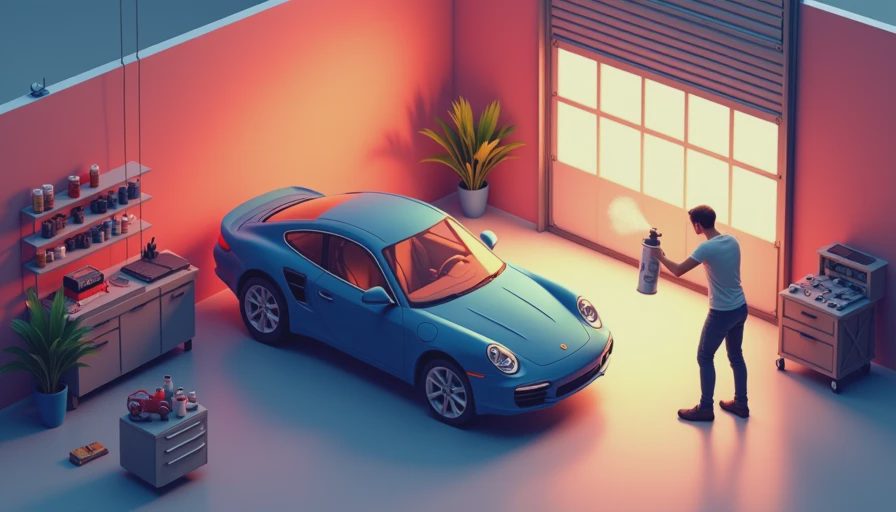
Store bought clear coat refers to aerosol spray cans or small liquid kits sold at auto parts stores. Brands like Dupli-Color, Rust-Oleum, and Spray Max are common. These products are designed for small touch-ups, not whole panel coverage. When applied to an entire hood, door, or quarter panel, the results are almost always disappointing. The chemistry is different from professional two-part urethane clear coats: they dry softer, have less UV resistance, and lack the durability needed for exterior surfaces.
The Risks of Using Store Bought Clear Coat on Whole Panel
Applying store bought clear coat on whole panel introduces several failure points. First, adhesion: these products are not formulated to bond over fresh base coat the way professional clears are. Second, hardness: a store bought clear remains softer, meaning it scratches and chips easily. Third, UV protection: within a year, you'll likely see fading, hazing, or yellowing. Finally, orange peel: aerosol cans produce inconsistent droplets, leaving a textured finish that no amount of sanding can fully correct. We've seen owners try to buff it out, only to burn through the thin layer.
Case File Example: When Store Bought Clear Coat Fails
We tracked a 2018 Honda Civic where the owner used a store bought clear coat on whole panel after a fender repair. Within six months, the clear began peeling near the edges. By year one, the entire panel had a chalky appearance. The owner spent more on removal and repainting than if he had paid for professional clear coat upfront. The lesson: store bought clear coat on whole panel is a false economy.
Professional Clear Coat vs Store Bought: The Differences
Professional clear coats are two-part urethane systems that require mixing and spray gun application. They cure hard, resist chemicals, and withstand UV exposure for years. Store bought clear coats are single-stage, air-dry formulas that never reach the same crosslink density. The difference in appearance is obvious under a garage light: depth and gloss. If you're worried about resale value, know that paint defects from store bought clear coat on whole panel are a red flag to buyers and appraisers.
How to Spot a Store Bought Clear Coat Failure
Look for these signs: excessive orange peel (looks like a golf ball surface), low gloss even after polishing, fine cracking (crazing) around edges, and premature peeling on vertical surfaces. If you see these on a panel that was supposed to be fixed after an accident, the repair shop may have cut corners using store bought clear coat. Always ask for the product and process before approving paint work.

Should You Ask Your Shop to Use Store Bought Clear Coat?
No. Reputable collision shops will refuse because they know it voids any warranty and jeopardizes the repair. If a shop suggests using store bought clear coat on whole panel, walk away. It signals either inexperience or a willingness to sacrifice quality for speed. Insist on professional two-part urethane clear coat from a known brand like PPG, Sikkens, or Sherwin-Williams. Your car's finish—and its long-term value—depends on it.
Frequently Asked Questions About Store Bought Clear Coat on Whole Panel
**Q: Can I apply store bought clear coat over existing clear coat?**
A: It's possible but risky. The adhesion between two different chemistries is unpredictable. If the existing clear is damaged, the store bought product may delaminate quickly. Professionals avoid this approach entirely.
**Q: Is there any scenario where store bought clear coat on a whole panel is acceptable?**
A: Only if the panel is temporary—like a track car or a beater that will be repainted soon. For a daily driver or any car you plan to keep, it's not recommended. The cost of redoing the work later far exceeds the upfront savings.
**Q: How long does store bought clear coat last on a whole panel?**
A: Expect 6–12 months before noticeable degradation. UV exposure causes yellowing and loss of gloss. Professional clear coats last 5–10 years or more with proper care.
**Q: What about using a professional clear coat in a spray can?**
A: Some brands offer 2K aerosol clear coats (like Spray Max 2K). These are better than 1K store bought clears but still not as durable as spray-gun applied two-part urethane. They are designed for small repairs, not entire panels. Use them only if you've practiced and accept the higher risk.
**Q: Does insurance cover paint defects from store bought clear coat?**
A: Typically no. Insurance policies cover accidental damage, not poor workmanship. If you DIY and the paint fails, you're responsible for the cost of stripping and repainting. Some shops offer warranties—but only if they do the work with approved materials.
In summary, store bought clear coat on whole panel is a shortcut that leads to costly rework. The evidence from our case files is clear: pay for proper materials and application, or pay again later.
No notes yet — write the first.